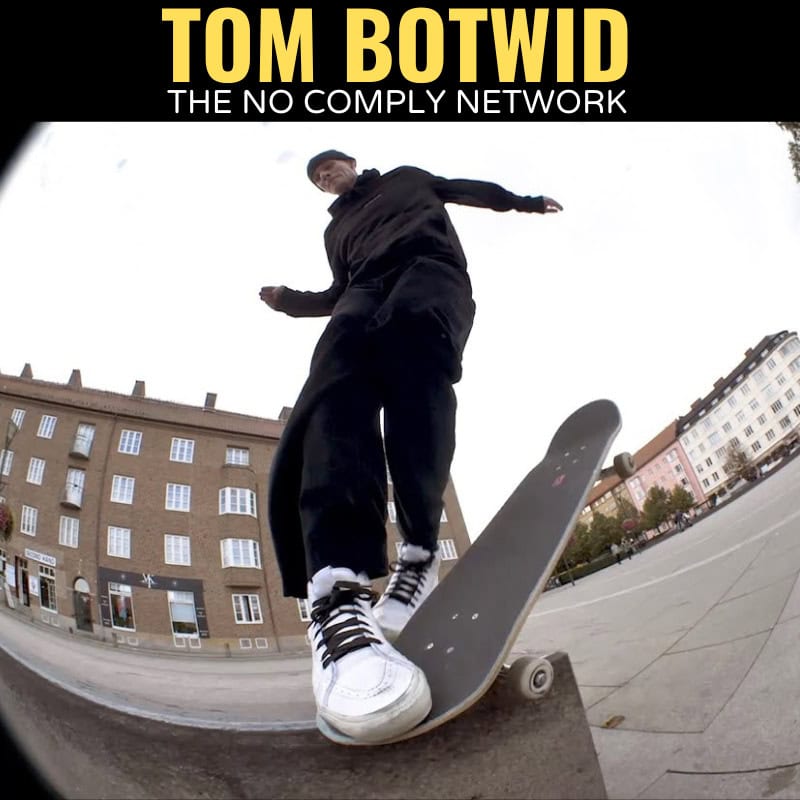
Shot by Makke Bengtsson
Tom Botwid is a skater and artist from Sweden who runs Poetic Collective.
He’s put together some of the most unique ledge moves that we’ve ever seen.
But alongside his ledge skating skills, his eye for connecting stylish shapes, wood and concrete extends from plazas and bench spots into his paintings, sculptures and art for his brand.
It’s rare to find someone that runs a skate company, who makes all the graphics, and shreds as hard as the skaters on their team but Tom manages to stay on the grind and nail all his deadlines whether that’s for a video, a brand project, or Poetic’s latest collection and he’s got an original approach to doing both.
So we were stoked that he was down to join The No Comply Network
Read Tom’s interview below to find out his experiences learning to skate in Sweden, Malmo, rolling around Europe, Berlin, Barcelona, finding his style, creating his art, starting Poetic Collective, sponsoring his team, Aatsi, Helena Long, his influences and inspirations, Erik J Pettersson, Nose Taps, Push Crooked Grinds, and his favourite skaters, videos, filmers, photographers, and spots of all-time and a lot more.
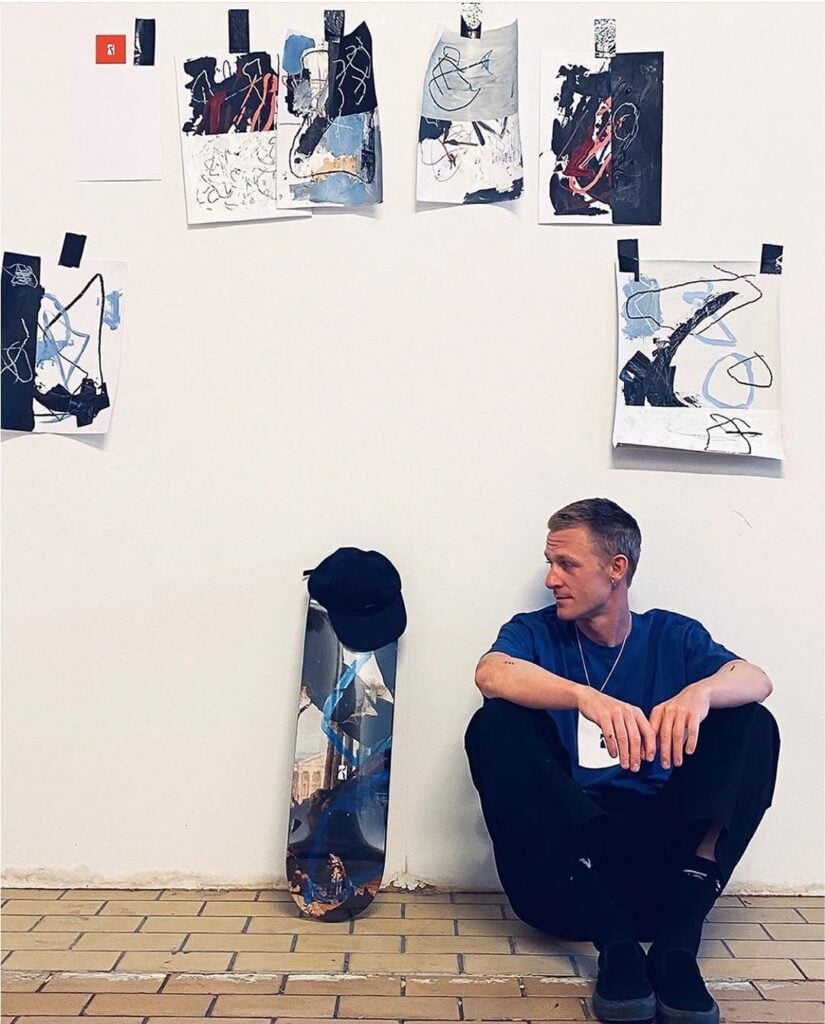
Tom Botwid: Shot for Poetic Collective
What’s your full name and where are you from?
Tom Botwid. I’m from Sweden. I was born in Stockholm, but I only lived there until I was six. Then my parents moved to the countryside here in the south of Sweden, where I started skating. I started going into Malmö a lot during my teens, skating Bryggeriet, which is the indoor park. That’s kinda when everything here was starting as far as the big parks and everything, you know.
So, I spent a lot of time here, but then I moved to Málaga and then to Barcelona, where I was skating for a couple of years, and then to Berlin, where I went to the art academy and lived for a couple of years. After that, I moved back to Malmö.
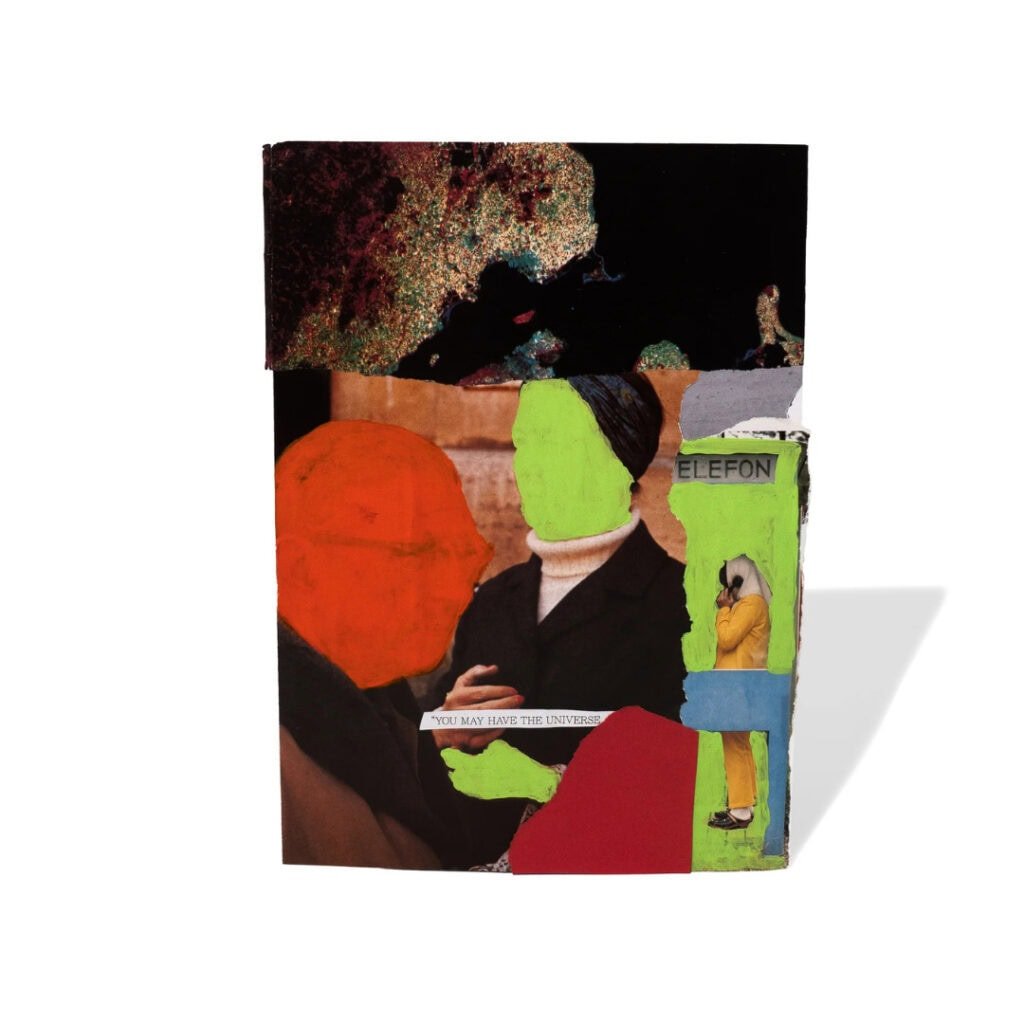
You May have the Universe by Tom Botwid
Rad. So there was a lot of back and forth, and you’ve sponsored skaters in different countries now. You’ve explored Europe. But just to hop back a bit, how old were you when you started to skate?
I started when I was around 10 or 11. There were some kids skating at my school, and I thought it looked cool, but I couldn’t Ollie or skate or anything. So I started skating outside in a parking lot, trying to learn. Once I had learned to Ollie, everyone else had quit. I skated alone early quite a lot on and with my brother for a little bit. But it was really ‘countryside skating’, you know, jumping off a loading dock behind a supermarket where there was the only piece of good flatground.
Yeah for sure. It’s not like that for kids nowadays. There are loads of places to skate everywhere
No. It’s different, especially here; you know, there are skateboarding high schools and big outdoor parks. Kids grow up with skateboarding served in a different way. Whereas back in the day, I was the only kid skating in my school, and all I wanted to do was skate, watch skate videos, read skate mags, and just be fully immersed in skate culture, doing that alone behind the supermarket. If I look back and think about kids today, I think there’s a much shorter attention span. When I think back about that, it was pretty insane that I was just alone for five hours behind the supermarket trying to flip my board.
What was the first skate video that you remember watching?
Menikmati was one of the first videos that I had. So that was that time, VHS. Watching Koston.
A lot of skaters now have never sat down and watched a full-length skate video from start to finish but that was normal in the 90s and early 00s
I remember getting the first one that really influenced me a lot, PJ Ladd’s Wonderful Horrible Life on VHS. I had that on such rotation, especially his part. That was just him coming back to skateboarding creativity.
That was maybe my first time watching something where I was like woah I’ve never seen that before! There was just so much flatground, weird Pressure Flip things, and reverts on stuff and tricks that you just didn’t see anyone else do, and I found that at a very young age. That caught my eye a lot.
Yeah, it’s one of the sickest parts of all-time. So, you said that your brothers skated, are they still skating now?
My little brother started skating with me. We skated a lot together when we were younger. He was super good, too, but I think he never had as big a passion for skateboarding that I’ve always had since I’ve been skating. He helped me a lot in the initial phase of starting the brand as well. These days, he doesn’t really skate, and he’s not involved in the brand anymore, but he’s also been a big part of the skateboarding journey that I’m on.
Nothing’s better than skating with a couple of homies or a friend, so having a brother who skates must have been dope
Yeah, exactly. I mean, you need to spark each other and try things together and stuff and we did that a lot.
So your brother was part of your first crew, but who were the other skaters you first skated with regularly?
I moved to a city called Lund, that’s outside of Malmö, where I went to school and that’s when I got a skate crew. Before that, I was really just fully in the countryside, just skating by myself and with my brother. But then we started skating at this place called Gastelyckan, which is an abandoned industrial concrete site. It’s just the foundation of a building that was never built. So there’s a concrete floor where we built a lot of things to skate and we skated there a lot. So that was really my hangout. I would always be there and we were just a group of friends that skated there a lot. Once we were out of school, that’s also when we moved to Málaga and Barcelona together. That was kind of the initial crew. But none of them really skate as much these days.
What was your first setup?
I think my first setup was more of a supermarket setup. But I do remember getting my first proper board, which was a World Industries board and it had some Venture trucks. I was super psyched on that. You know, when you’re 10 or 11, you just want a Wet Willy or a Flame Boy thing. You’re so young, I thought that was super sick.
What was the first skate magazine you read?
I think at first, there was a gas station out in the countryside where I lived that for some reason had Transworld Skateboarding. So I would get that magazine every new issue. That was once a month, and it was really always got skate news. So I was reading those religiously when the magazines were fat.
Magazines are a gateway into skate videos. In those early days when you’re a kid, you just see it, I didn’t understand the tricks. It’s just a bunch of people jumping. But when I was reading, it made me feel part of something, I think. You know, when you learned all these names and you learned a little bit more about them and you started reading into things. I was so into that, just getting into it. Not only the physical activity of skating but also immersing yourself intellectually in it as a kid was important too.
What was it about PJ Ladd’s Wonderful Horrible Life in particular that made you get it on rotation?
It was PJ Ladd for sure. There was this mystery about this video because it was named after him, and you were kind of waiting to see his skating. But also when I saw that part because I’ve been thinking about it, looking at the direction that my own skating has taken, later on, that I already, at a very young age, had an interest in seeing tricks that were different, and he did all these tricks that were just that.
He did Front Shuv Backside Revert, Varial Heel Back Revert. He did a bunch of weird flatground tricks, and that got me super into skating flatground and doing these weird reverts, trying to think about tricks that I hadn’t seen. I think he was the first skater that I saw that maybe had that thing about him and that really inspired me a lot.
PJ Ladd is from Boston, but more locally, who was inspiring you?
There are two Swedish skaters who are relatively unknown but had a huge impact on me. One is more well-known, Erik J Pettersson. He’s still on Sour, but he’s not skating that much anymore. He was a big part of starting it, in the initial phases of Sour, and in Sweden as well. He and Malcolm Tallgard were living in Barcelona, and they were just doing it.
Erik was the first person I saw do a Nose Tap to Manny. He did it in an Alis video that came out with a DVD with Kingpin way back. I remember picking that up, and he also had the same thing about him. He did the Nose Tap to straight Manny. He did these Nollie Late Front Foot Flips. He just had some tricks that no one else did and had a super good style. He was always the inspiration for that early on, and still to this day, I can watch some of his stuff and think he definitely has something unique about it. Nowadays, he’s a flamenco guitarist in Barcelona.
Erik’s Back Tail to Front Nose at Parallel was wild. I was so surprised because I’ve been to that spot multiple times. I never looked at it that way. That dude is on his own level.
He was also relatively unknown. When you saw him skate live, he just had this insane board control. You never knew what to expect.
When, I’m thinking of Swedish skaters, I remember a really gnarly dude called Mika?
Mika Edin? Yeah, Mika’s insane too. Mika was really in Stockholm at that time. He was the one, you know. I think he was the. He did some things like Backside Nosebluntslide a 15-stair handrail, probably in 2007. It’s a long time ago. If he had come out today, he would have been a top pro. But at that time, it was so hard to make an impact outside of Sweden, if you were still based in Stockholm and he decided to stay there. But he was insane too.
Was there anybody else who you were looking up to as an early influence or inspiration?
PJ was my big inspiration. Then there were some local ones. There was Danijel Stankovic. He’s from Malmö. He was always working in the skate park, and he’s a bit older. He was always the local hero here in Malmö too. I mean him and obviously Pontus Alv as well. But Pontus was not living here at that time. So Danijel was really someone whom I looked up to a lot. He was on Minute, The Harmony and then The National. He had a full UK board-sponsored career and then went on to be a big part of Nike, being the European Marketing Manager, and still skates amazingly to this day. He’s a good friend of mine here.
I think he’s actually going to have a part coming out pretty soon. He has been working on something, but he doesn’t work for Nike anymore. He’s running the skateboarding app called Shinner. It’s a spot app. He’s a firm believer in it and I fully back him. So we’ll see what happens with it.
Right. So what spot where you skating the most growing up?
In Malmö, I was skating a lot in a city outside called Lund at Gastelyckan, and then I was skating Bryggeriet at the indoor park I was skating. That was before some of the plazas had been built here. There was this one plaza, called Värnhemstorget, that we skated a lot, that’s still there, and then the big outdoor park here, Stapelbäddsparken, was built too. So, there were mostly parks, and then I moved away from Malmö at 18, you know, and then skated in Spain.
I think at that time, everyone who skated in Europe wanted to go to Barcelona to party and skate. That’s what everyone wanted, and me too. That’s all I dreamt of, so I went and did that.
For sure. So, where do you skate the most now?
I skate this plaza by the art hall here, Konsthallstorget, that we call Svampen and The Mushroom because it has this mushroom-shaped kind of stage in the centre. There are a few ledges there, and that’s definitely where I skate the most. I skate there almost on a daily basis.
It’s the go-to spot. It’s probably my favourite spot in the world. I think since that was built, it was good for the city. There is a meeting place, and it’s a nice place to hang out. Certain plazas just have this good vibe where you can really feel comfortable. I’ve always been kind of drawn to plaza skating. So, that’s definitely the spot.
You’re localising a spot, using architecture in a different way and creating a buzz in an area that wouldn’t be there without it.
I enjoy building something. You’re at one spot a lot, and your skating kind of adjusts to that spot, and maybe you start finding things and doing things differently. I think going into this kind of rabbit hole at one spot has always been something that I’ve liked. I know it’s definitely not for everyone, and I have a lot of respect for people who are more on the spot search, but I’ve always been very into skating one place.
Was there a moment where you realised you wanted to skate for a career, or was it more that somebody approached you?
It was organic. I definitely wanted, as a kid, to be a sponsored skater. I think every kid wants that, you know. I had some different things throughout the years, getting some shop boards from one shop and some trucks, and I was on flow for some things.
But it was very low-key throughout most of my life. I’ve never lived fully from being a sponsored skater so it was always more going away, filming videos, and it was product only. It was always a dream. I think when I stopped pursuing it, that’s probably when it started going better.
For sure. Now you run Poetic Collective and you sponsor skaters. When did the idea of starting your own brand come into the picture?
Yeah, I mean, it was always there. But it started coming more and more into my mind as I was also creating more things. But it was a very organic process. I never went into it with the idea of, oh, I’m gonna do a skate brand that’s gonna be distributed across the world. It was more an art project.
In school, I did a few boards, a few t-shirts, and then one shop started carrying it. It was organic like that. It’s even hard to pinpoint when it started, because for the first couple of years I only did stickers. So I just made some boards I sold them to some friends, some friends supported it, and then we started skating them, and then slowly we did a first video, and then from there I started building it.
What was that experience like living and skating in Barcelona back in the day?
Yeah, I always thought that was what you were supposed to do, if you wanted to do something with skating, be in Barcelona, it was that mecca of skateboarding at that time. But for me, it was humbling. I got there and realised that we had been skating these skate park ledges that were lower with metal edges, and then you come to these crusty things and see people ripping so hard.
I was just like, alright, you know, there are definitely guys who are really skating in a different way because, at that time, we didn’t really have those types of ledge spots and stuff here.
We were skating a lot of homemade ledges that were a bit easier. So it was a humbling experience for sure, but also super fun, and I skated a lot, filmed a lot, partied a lot. It was, you know, a classic thing.
I mean, definitely, rolling up to MACBA and seeing Luypa Sin doing a Kickflip Backside Nosebluntslide pop out on the ledge with zero effort. It kind of helps you redefine what you thought was good or not.
Exactly, and I also realised the tricks that I thought I could do, I just couldn’t do on those ledges. I think that’s a benefit of having a good plaza in your town, like we do now. When you get to other places in the world and start skating, you’re used to skating something that’s not a little skate park ledge, but some granite things where you have to lean into your grinds and stuff. It makes you more able to adapt to other street spots.
Where were you skating the most, MACBA?
Yeah, I went to MACBA. Basically the same circle as everybody else at that time. But then I actually moved to Málaga because there was a big Swedish community there. All the Swedish skateboarders who skated for Sweet during that time were living there and filming, it was a bit more of a low-key version of Barcelona. They had really good plazas, like Plaza Marina. So I moved there then for two years, just skating those plazas with all those guys. They were kind of my idols growing up, a few years older. They were all like Daniel Spängs, and they were crazy good, you know, killing it.
So, your Spanish adventure didn’t end in Barcelona but at what point did you think, okay, I need to put down the Don Lemon and do something different?
Yeah, I met a girl at that time, and we moved to Berlin, and I started shifting my focus from skateboarding to art. I was getting very into that, applying for art schools, and finally got into Berlin. So I moved there and spent a few years at the academy, focusing more on making art. But I also got a little bit re-sparked on skating. I met a crew there that was filming VX in Berlin and skating street, so we filmed and made a video at that time in Berlin.
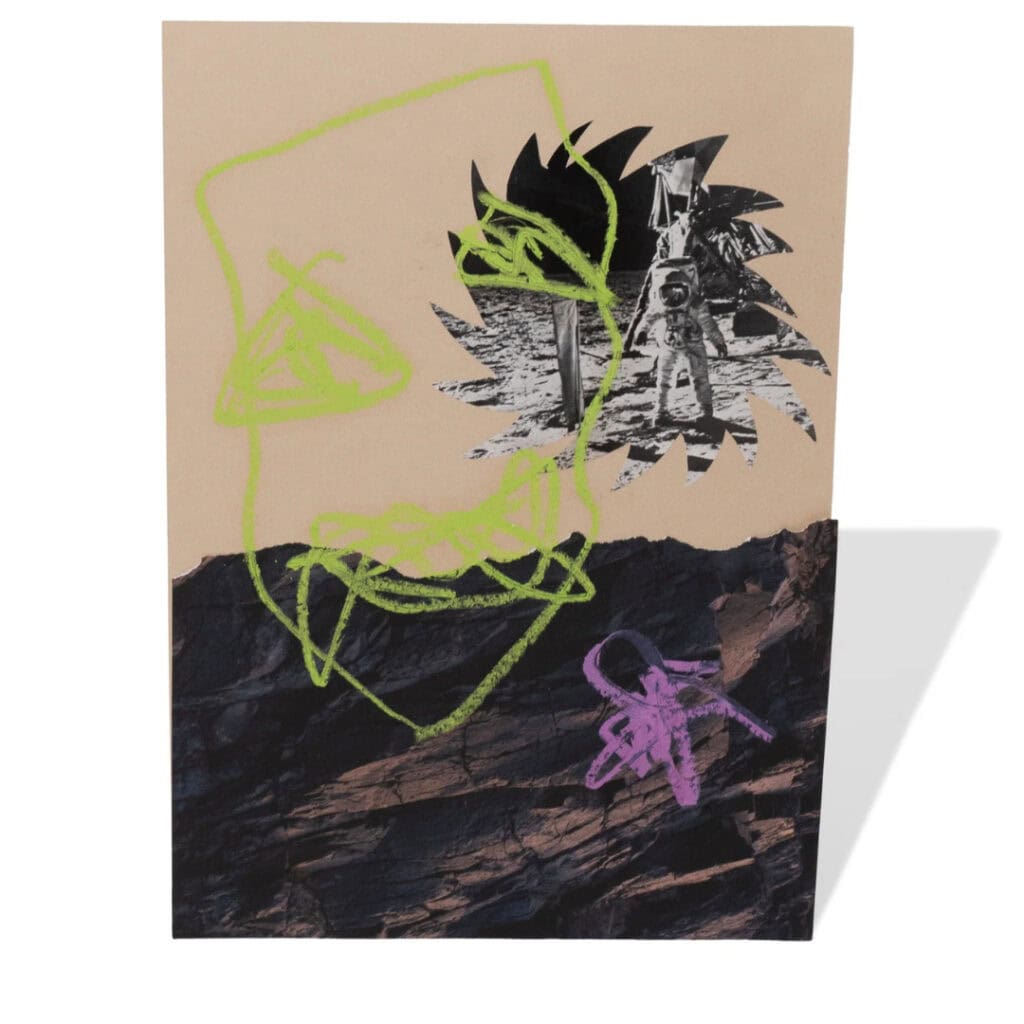
Space by Tom Botwid
I think that’s around the time when my skating started taking another path. Also, at that time, I was more focused on my schoolwork than skateboarding in any other way. I think that opened me up. Being in art school also shaped my view on skateboarding a little bit. It gave a new direction where I thought about it differently as well.
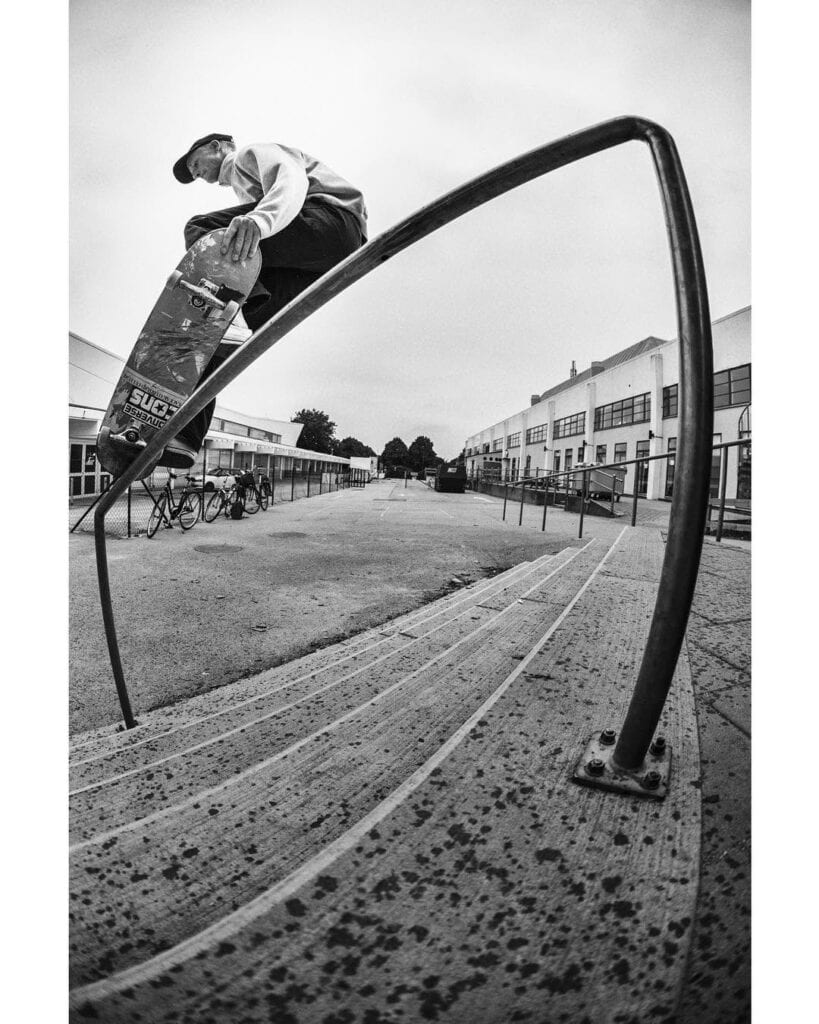
Tom, Nosegrind Tailgrab: Shot by Nils Svensson
The Berlin art scene challenges a lot of things but if you’re young, creative and you skate the main one is your ability to go to sleep. It’s 24/7
I think it was definitely that. That vibe and then, of course, a lot of people go maybe too heavily into living as a Berlin art student, cliché as well.
I was just not used to that amount of it. It was a new scene, a new type of nightlife, drugs, and other things that were just not my vibe. I think that side of Berlin was a little bit too heavy for me and also the reason that I feel after school I was pretty done with this, you know, I’m down to go somewhere else. I still have a good connection to Berlin. I have a lot of friends there. Our logistics also ran out of Berlin now for Poetic, so I go there quite regularly as well.
How did you come up with the name Poetic Collective?
I think it was a slow process, but I went to the Bright Trade Show, this trade show in Berlin. At one point, I got the offer to have a spot there that was literally 3 square metres. They said, if you come down, you can have the spot. I thought, alright, I’ll throw the three boards that I made and a few T-shirts into a bag and just went down fully on a whim by myself. I did that twice a year for a couple of years.
Through that, it started becoming more of a brand. I started taking it more seriously myself. I feel that through doing that, other people also did too. I got to know even more people involved in the industry, and there’s still a lot of the friends and contacts that I made from there that I still have around me these days as well.
Sick
I wish stuff like Bright was still there too. It was very low-key. It was mostly a bunch of people meeting, drinking beers. But it was also these European skateboarding awards too, where you could get nominated for brand of the year and stuff, and you would see everybody and get to know people. So I think those were also really important years for me. Then they kind of closed up. But I think throughout that process, I learned a bit more about how things work and also started trying to make it into a bit more of a brand.
Also when you’re presenting something in the way that you do at a trade show, even though it’s just 3 square metres, it forces you to look at it from more of an outside perspective and see how it is. But that said, I feel I’ve been doing the brand for a while now, and I would say now I feel happy with the way it looks and where it’s at, but it’s taken a long time. Production and doing a brand is not something you just start and I came from no experience, It’s been really learning by doing, and it takes time to learn that.
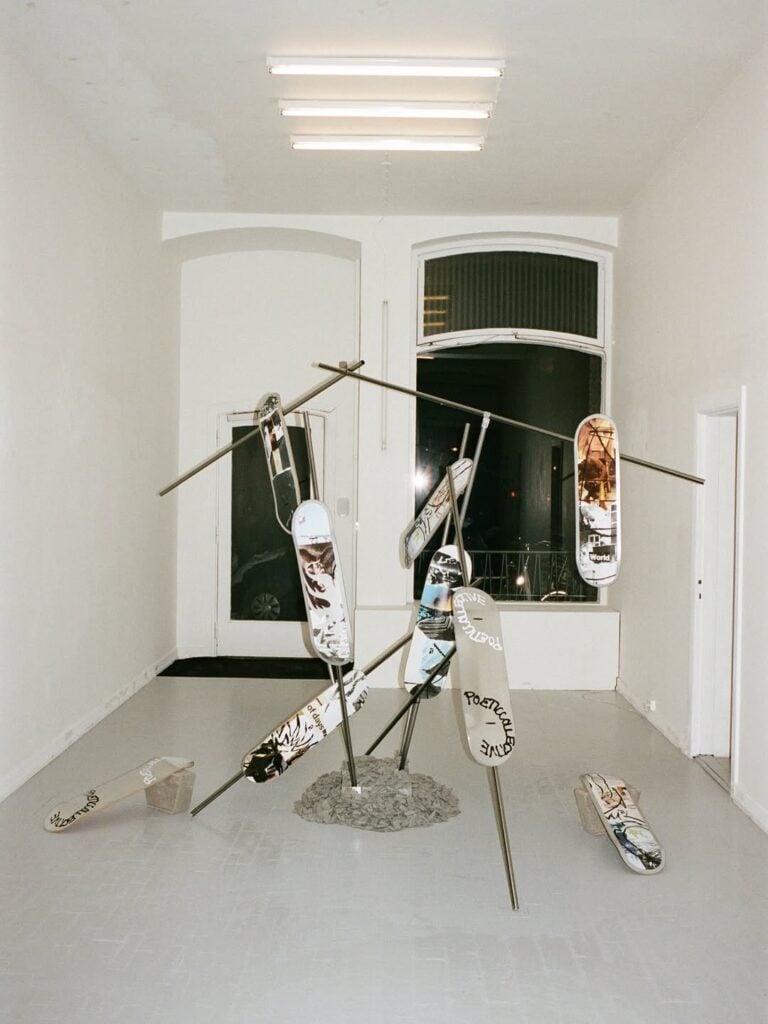
Poetic Collective Board Installation: Shot by Lukas Gansterer
Right. Do you have any advice for people who want to start up their own brand?
I think you should do it because you want to do it. People sometimes go into these things thinking they want to work with skating, or they want to have that as their job, and you start based on that. But it’s so hard and it’s so much work that you should really be saying, “I want to do this.” Whether it’s a job or a business or just me and three stickers, the motivation should be so strong to express something and do something creatively.
That should really be the driving force. I think that’s essential. Same as if you want to be an artist and do that, really, if you have other things that you’re into, you should probably pursue those instead, because it’s so hard. Do it if you really have to. If you really feel that this is what you want to do, no matter if you make a living from it or not, I’m just going to do it. You just have to make sure that you have that motivation in you.
So do you create all of the Poetic Collective graphics?
I do, yeah.
Yeah, they look tight. Have you always been into art?
For sure, I’ve always been into drawing and creating things, and so that was always a big part of my life. In art school, I think my art became a bit more conceptual, and that also had maybe the counter action that I wanted to do some things that were more graphically oriented. That’s when I started doing board graphics and stuff as well because I felt there was a lot of output that I could do, that just didn’t seem to exist within skateboarding at that time.
I think my own practice nowadays is very much within the brand; I have so much creative output within the brand that I don’t do much outside of that, but I do basically all the work for the brand.
Every deck here is a wall hanger basically
Yeah. I appreciate that but actually they all are. I think that’s maybe what differentiates Poetic from other skateboard companies is that everything on the boards is also artwork that does exist. It’s not laid up in Illustrator and put together. It’s all handmade and then scanned and made into the prints for the boards, you know, so it all starts with me sitting down and cutting and pasting things and drawing and painting.
So every single graphic you’ve had hands on it in some way
Yeah. Everything.
How do you approach making the graphics?
I feel now, because these days, the brand is more structured, and it’s working in seasons, I always try to take some time, leading into when we start working on a new season, to really focus on creating a series of works that I feel can be representative of the season. So that is perhaps somewhere between 8 and 12 pieces that we have, and that becomes the foundation for it.
Rad, so you get that process of coming up with a raw idea and then push it through to the final piece and then skate it
Yeah. Also making it so it is accessible in a different way. I felt that when I was very focused on making art and exhibiting in some galleries and things; I feel the people that go to those galleries, the people that have the money to buy that type of stuff, are so far removed from me or my background that I don’t know many people who have the financial means to buy art.
Whereas skateboarding, you can create things that reach people in a different way. When it’s on boards and clothing and stuff, it’s more accessible for a larger part of my community, so you work more towards your own community instead of working towards a small elite that can invest their money in art.
Yeah and then just put a great painting into a private vault no one can see.
Yeah, exactly.
Are there any skater artists or brand owners who you look up to?
I think anyone who tries to express something through what they do is always inspiring to me, and that’s it. It’s always cool to see different things. It’s cool to see the Japanese guys, like Evisen, that are on their own vibe. I think everything that is different is something that I always value. Also at the top of my mind that I would say The Gonz and Ed Templeton; they are the OGs, the godfathers of this.
But at the same time, I’ve always not been so focused on the type of skate art that I felt was very established within skateboarding, but more trying to look at other things, you know, and that can be artists, fashion designers, or people who just do their own thing. I think that some people who work to express something outside of the norm and build their own thing on their own journey is always what I felt was most inspiring.
I think it’s important to look at other things too for inspiration. I think some of the most inspiring things regarding skating for me didn’t necessarily come from skating, but more on how you can focus on one thing and develop your own practice, be that within skating, art, or something else.
Helena Long is pro for Poetic Collective, that’s sick. At what point did you start building a team and who was the first person you put on Poetic?
I think in the beginning it was a lot of my friends, very local, people around me that were the team, and then that was basically it. It was all local people until Helena Long was one of the first ones from another country, and so that was really a big step. But she had been wearing our clothes and she came to Malmö a lot, and it felt very organic. She’s the best person ever. So, I was super excited about that and excited to be able to turn her pro as well.
So it’s been an organic process of building the team, I think, step by step, from people around here, locals, to these days, where I would say there’s still a Scandinavian focus, but there are riders across Europe, you know, so same there. Things take time, you know, but I’m very happy with where the team is these days, I’m super stoked on everybody that we got on. They’re all great people and that’s been something that’s been important to me, that I put people on I like and that work together and to have a family vibe for sure.
Who skates for Poetic Collective right now?
The main riders right now are Aleksi Suovarra, Atsi. Everyone knows him as Aatsi, he’s insanely good at skating, he’s from Finland. There’s Gabriel Bjørsvik from Norway, Helena Long from the UK. We got Sebastiaan Vijverberg from the Netherlands, Quentin Bouillon from France and then here in Malmö, we also have Moa Zander and Eliott Toiminen. So that’s the main people right now.
I’ve seen you’ve also got a shop or is it that an exhibition space?
Yeah, it’s more of a showroom, a place where we sit and work, but it’s where the brand truly lives. We don’t have regular opening hours and stuff. I think that would take away a lot for me to be able to stand there all day. I don’t have time for it, and I think Malmö is maybe not the city to have a fully brand-focused shop either, you know, it’s a smaller place.
You’ve got a lot on and you do so much..How do you juggle all of it?
Yes, I do a lot of things! I’m slightly overwhelmed myself sometimes, but I try to focus on one thing at a time and do it because I manage the brand and I have some other brand consultancy work outside of Poetic as well. I also work for Vans, helping with the Scandinavian team, and try to juggle that with family life and everything else. Also trying to skate myself as well! So that’s something that’s important for me to get back to always, to actually be on my board, you know?
Definitely and you’ve filmed some bangers whilst doing all of that. Props. Is there a Poetic Collective project that you’ve put together that really stands out to you?
I think the recent projects that are coming out now and even some that are yet to come out. Yeah, it’s really what I’m more stoked on. I mean, I think you’re always going to feel that way, but for me, it’s been a journey of learning more about apparel, production, and industry and being able to get to a point where we can really produce a line that I feel happy with. I feel that’s kind of where we got now and that alongside the team that we have today, the videos that we’ve been releasing in the last two years, I’m very stoked on.
It’s been cool to see some of the guys like Aatsi go from relatively unknown to being one of, I would say, the most up-and-coming skaters in Europe, that people really watch, you know, see that happen and be a part of the brand and people supporting. Seeing Helena grow within Vans and Poetic and being there for that, that’s all been extremely impactful for me personally and I’m happy to be a part of that as well.
Yeah Helena rips and that Aatsi dude is sick
He has his own style, which is really what I think is cool about him. When he was coming up, when I saw him the first couple of times, everyone was in a big boy phase, he just had this tucked-in T-shirt, shaved head, and glasses, and really stood out with the skating and with his look. He’s a character, and that’s always what I’ve been looking for in the team – people who express something through their skating and who are characters as well. That’s always something within skateboarding that people feel as individuals, you know?
Definitely. What’s your favourite Aatsi part?
The one that’s going to come out this autumn, I think people will see why, its definitely my favourite. He’s grown into a beast in the last couple of years. It’s insane to watch these days.
Speaking of unique things, your Nose Taps and Push Crooked Grinds are sick. You’re definitely the first person I’ve seen combine those and pushed both into their own levels. How did you start doing Nose Taps?
I think I was always, as a person, going into rabbit holes of things, you know? I think also with the art practice, I remember an art teacher, the one who drew two spots in front of me. Most people go, did two rounds with a pencil around one, and he’s like, this is what most people do. They do two rounds around each and then move on to the next one.
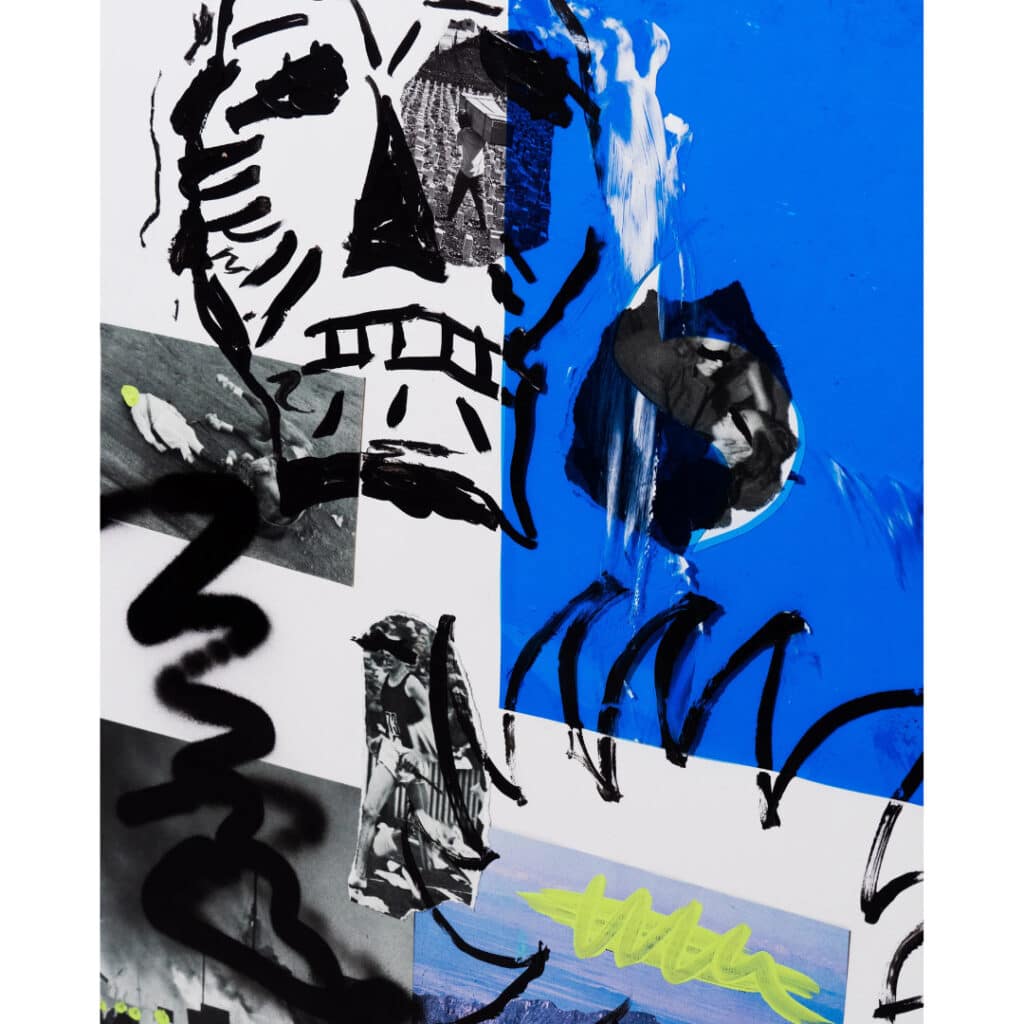
Skull by Tom Botwid
But to make something interesting, you stay on one and just keep going, you know, and I think that kind of mindset is something that I’ve had, and that influenced me. Once I learned these Nose Tap things, just a regular Nose Tap to Crook and then slowly building up that and noticing that I was getting stoked to do things that I haven’t seen before and put that into action is very rewarding for me rather than maybe doing a trick that I’ve seen a lot of other people do. I think it’s always been something that’s been very rewarding for me to try to think of new things and make them come to life.
So going into that full Nose Tap rabbit hole was really the start of that and then the same thing with Slappys and trying to Slappy bigger ledges and go into things. There’s also Samuel Norgren who skates for Poetic. He doesn’t skate that much these days, but he was also a big inspiration there. He was the first person I saw doing a Slappy Back Lip on a ledge, you know, he did it from the side of the ledge, he’s insane as well.
How did your Nose Tap Slappy 50-50 up and Nose Tap into a Crook go down? That was banging!
So, I went to that spot, it’s in Bordeaux and I was looking at these things. We were there and I was just told Markus Bengtsson, who filmed it, imagine if you did this! This spot is too good. I’m thinking about this right now and the spot is just made for it. Then I thought I’m probably never gonna find a spot like this again in my life. So I started trying it and it worked out. I still want to go back to that spot at some point. But I think it was a unique thing, you know, I was very happy with that one. I think it was something different.
Did you come up with the Push Crooked Grind or did you see somebody else do it first?
I think some people do the Push Crooked Grind. I know Nick Garcia did some Ollies into them, but I haven’t seen that many people do it. You know, maybe I came up with it. It was a way to grind longer. But yeah, I tried to figure it out myself.
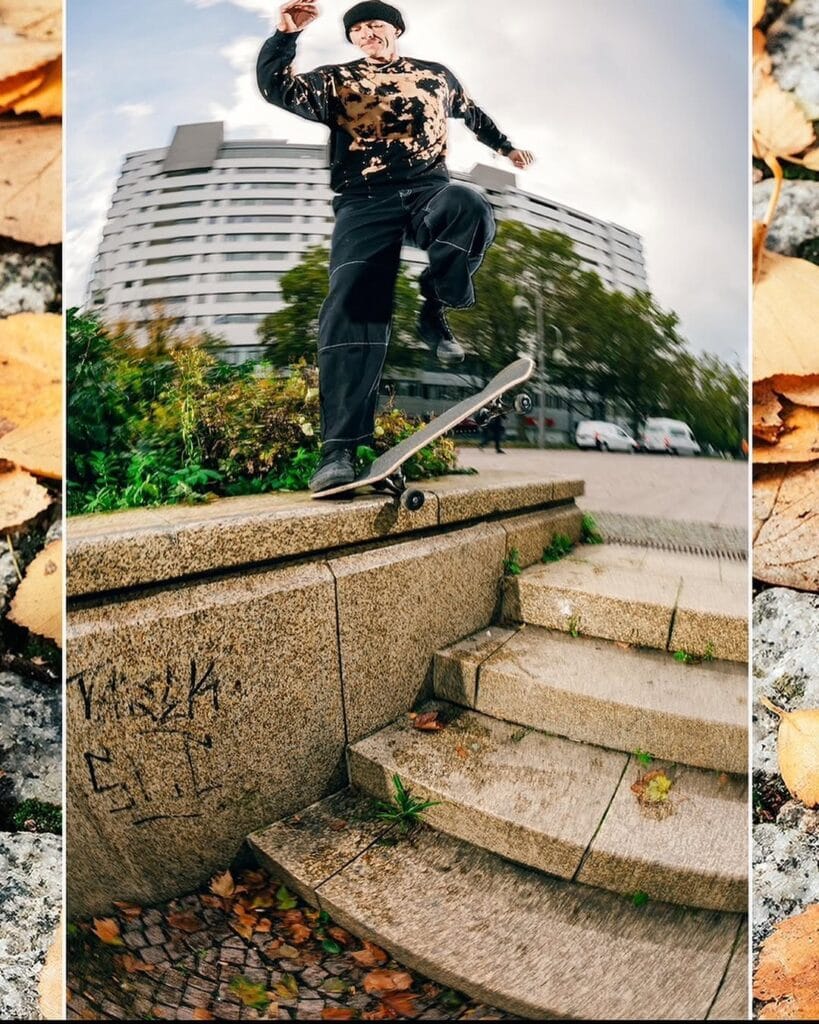
Tom, Slappy Push Crook: Shot by Joel Peck
So you saw Nick Garcia do it first?
No, I’ve seen him doing it afterward. I think I started taking one foot off and pushing to grind longer. I don’t remember if I’d seen it before somewhere or if it was something that happened because I was seeing some people do Noseslides and push. I think that’s where I started that. I saw some people do that, and then I thought, oh, maybe you can do the Crook and push. It came from that.
I think you might have done that first man. Have you ever thought about that?
I’ve always been into the thought of doing tricks that other people have never done. I’m not gonna say that no one’s done the tricks that I’ve done, but I’m always trying to do things that I haven’t seen before, because I think that’s always cool, you know, if you can imagine something you haven’t seen and make that come to life physically through the act of skateboarding, that’s a cool feeling.
I think that’s your trick dude
I appreciate that and maybe I did invent one!
Which Nose Tap Push Crook have you been the most stoked on?
The first time I flipped out, when I did a Nollie Inward Heel Out, that was also something where I was very stoked. You know, I always thought that would be sick to see. I hadn’t seen it. Then when I managed that one, I was very stoked!
You definitely made your own lane on that one, the trick really stands out in a way like PJ’s tricks did back in the day. It’s genuinely different.
Yeah, I’m always hoping to create that little feeling for people who see it. My wish is, of course, if you watch a video part or watch something, you have those surprise moments where you’re like, whoa, what was that? What happened? That’s always what I’ve been looking for, you know, and I’m looking for it when I watch skate videos, you know. I mean, in recent years, I’ve seen some people come up who are doing that.
Which skaters are inspiring you nowadays?
Akwasi Owusu is one of those who came up like that, and everything he did I was like, oh damn. He’s on some other shit, you know?
And he’s doing it all in hiking shoes!
Yeah, from what he wears to the tricks that he does, it’s a lot of expression. He can obviously do things that other people can’t, think of new tricks and Slappy in a way that’s just incredible, you know?
I think in the recent couple of years he’s definitely been one of the people that I’ve seen where I’ve been like, he’s sick. You know, he’s really on his own thing. Akwasi is definitely someone who’s made an impact and made skaters look at things differently. When he started doing the Slappy Over Crooks on flat bars and stuff, it was just like what the fuck!
I’ve heard Nose Press before but I like Nose Taps better
My friend Arthur calls it the Blob Up because that French skate crew Blobbies did it a lot as well. Kevin Rodrigues did a lot of them back in the day in Paris, definitely.
Who’s done your favourite Nose Tap?
The craziest one that I think I’ve seen I think Free posted it at some point when they did a Nose Tap thing. It’s this skater that I mentioned earlier, Malcolm Tallgard, who is from Sweden. He still lives in Barcelona. He’s lived in Barcelona for ages and he did a Front Shuv Nose Tap up to Manny at Parallel once, filmed on an iPhone. That’s an insane clip and it’s really the best Nose Tap that anyone’s ever done. On the big one. Yeah, that’s the one, being able to Front Shuv into Nose Tap, go up and be able to do that and bounce up all the way to Manny.
Right Are you working on any other projects you want to mention?
Personally, I’ve been working on a new video part for the past two years. It’s been a bit longer in the process this time. Life in general is quite hectic and full of things, but I’m excited to release that and alongside that, for the brand, there’s a lot coming. There’s a new Atsi part. The fall/winter collection just dropped, there’s the Sebastiaan Vijverberg part. There’s a lot of really nice things coming out. I’m very happy with where the brand is at right now as far as the product and the content and that’s taken a long time to get to that point.
Why do you think creativity is important to skateboarding?
I think you can express yourself through many different things. But I think skateboarding, to me, although it can also be done without creativity, I would say it’s just the strongest when you express something, you know, be that in, who you are, your skating, or your art. I think personal expression is always something I value a lot.
Agreed. So talking about personal expression, what’s your favourite skate video of all-time?
Favourite video of all time? Let’s go with PJ Ladd’s Wonderful Horrible Life.
Who’s your favourite skater?
Erik J Pettersson, always an early inspiration. Still to this day holds up.
Who has your favourite style on a skatebaord?
Gino Iannucci always had a great style, and these days Akwasi is someone that I really enjoy watching. So definitely two Asics riders.
Where’s your favourite skate spot in Sweden?
Svampen for sure. Yeah, it’s just the best spot. It’s local. It’s here in Malmö. It means a lot to me. It’s where a lot of good things started and came up for me. So that’s why.
Where’s your favourite skate spot in the world?
Bastille in Paris is amazing too. That’s also extremely fun.
Do you have any other favourite Poetic Collective edits?
I think the recent full-length video of Fairyland and also Gabriel’s part that came out recently called Roam are the ones that I’m most happy with. I feel it’s always easiest to say that you’re happy with your most recent work.
Favourite trick to put down on flatground?
On flatground? Switch Front Shuvit.
Nice. What has been your favourite trick that you’ve filmed so far?
I think the first Nose Tap Nollie Inward Heel that I did across the bench at Svampen was still something that I was super stoked about and just a bit surprised as well that I managed to pull that one off.
Who’s your favourite skate filmmaker?
I think Jacob Harris is doing a great job. Pontus Alv has always done a good job with his videos too. But Jake Harris with the Atlantic Drift. I think he’s doing something very personal and unique with his filmmaking, which I think is rare in skating these days.
Who’s your favourite skate photographer?
Alex Pires is a G and the best photographer.
Are there any artists making any other kinds of work in skateboarding who are stoking you out right now or in the past?
I feel like a big inspiration in recent years has been my friend Silas Adler. He used to run a brand called Souland here from Copenhagen and he’s just a general creative. He’s doing some great things in Copenhagen and we work a lot together. So I find him super inspiring these days.
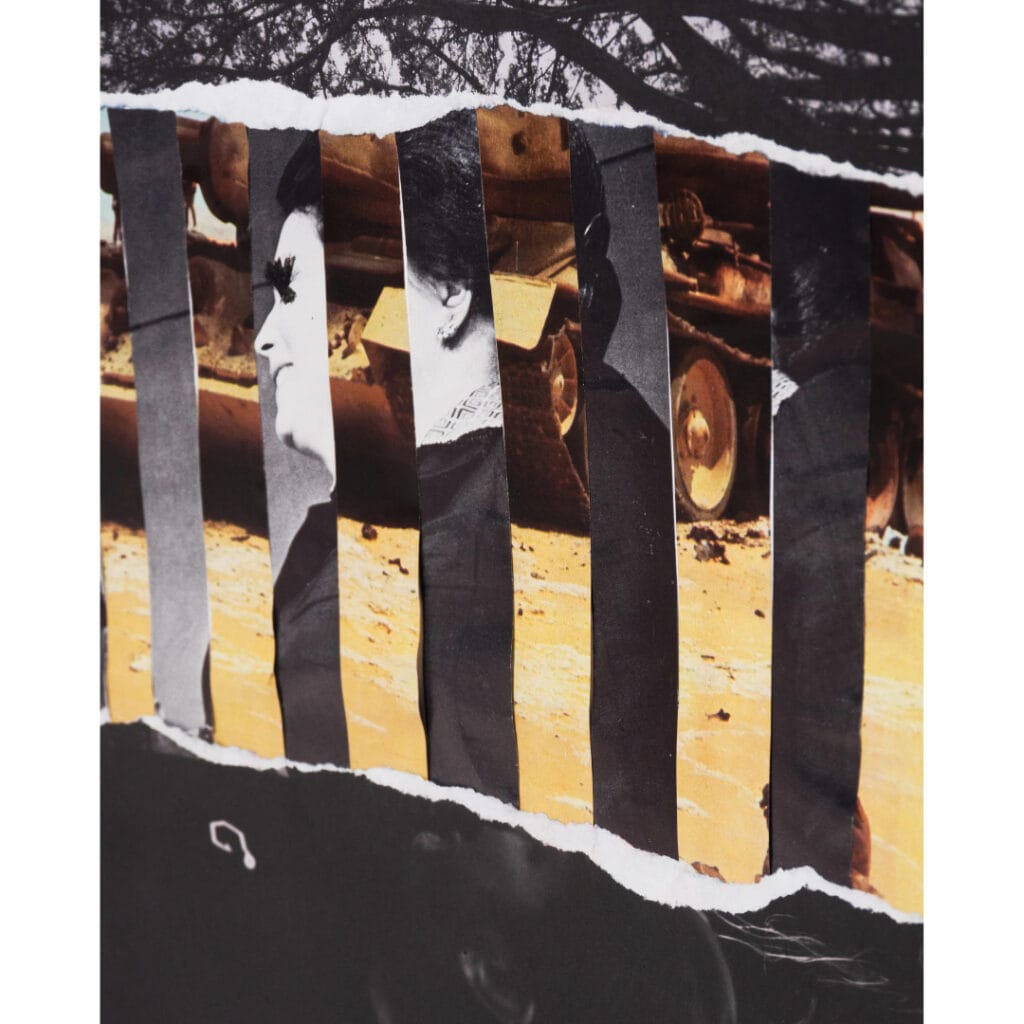
Torn Queen by Tom Botwid
Sick. Have to check his work. Any shout outs that you want to make to people reading this?
Yeah, shout out to anyone who has supported what I do and have done. It’s always much appreciated in any way. Thanks to Markus who works with me and films most of my skating and is a big part of Poetic Collective. Thanks to the whole Poetic Collective team and everyone who is a part of it; it wouldn’t be what it is without them.
Any last words Tom?
Don’t be afraid of being yourself and doing things differently, value that expression of yourself. That is something that I think is important.